İnan Seramik · Production
Çini and ceramics: one process
Kütahya çini and the white plate on the table go through the same chain: raw materials, body, forming, drying, biscuit, decoration, glaze, firing, inspection. The difference is not in the links of the chain but in the composition of the body, the temperature, and whether the decoration sits under or over the glaze.
| Stage | Çini (İnan Çini Dekor) | Tableware (İnan Seramik) |
|---|---|---|
| Raw materials | A quartz-rich body: quartz, kaolin, clay, a little frit. Whiteness and quartz content are the first condition for vivid colour. | Clay, kaolin, quartz, feldspar. In stoneware and porcelain more feldspar acts as flux; the body approaches vitrification when fired. |
| Body preparationSame in both | Grinding, sieving, ageing. For casting slip a litre weight of 1700–1800 g/L and 0.2–0.5 % deflocculant on dry matter; filter-press cake for pressing and jiggering. | |
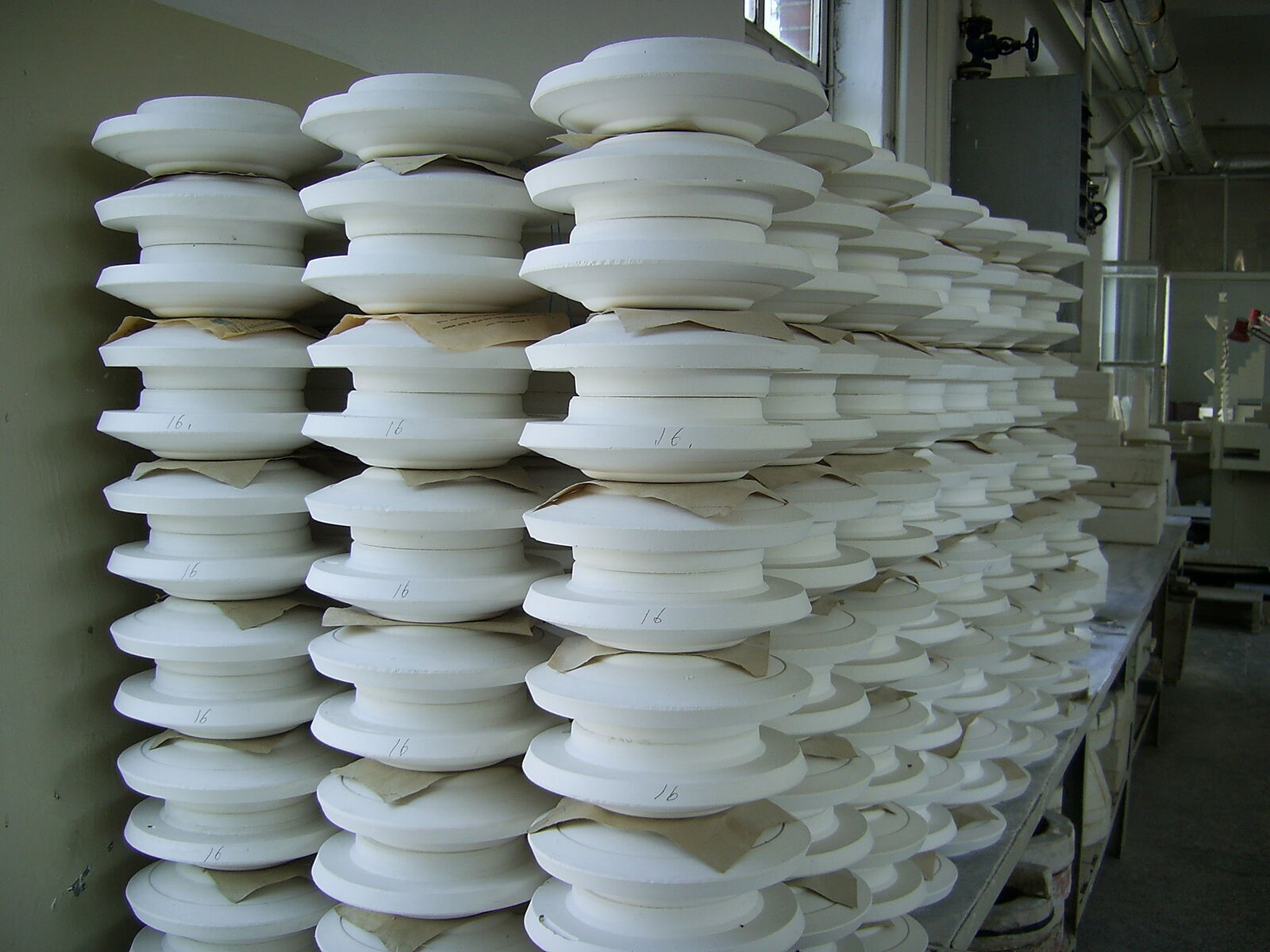
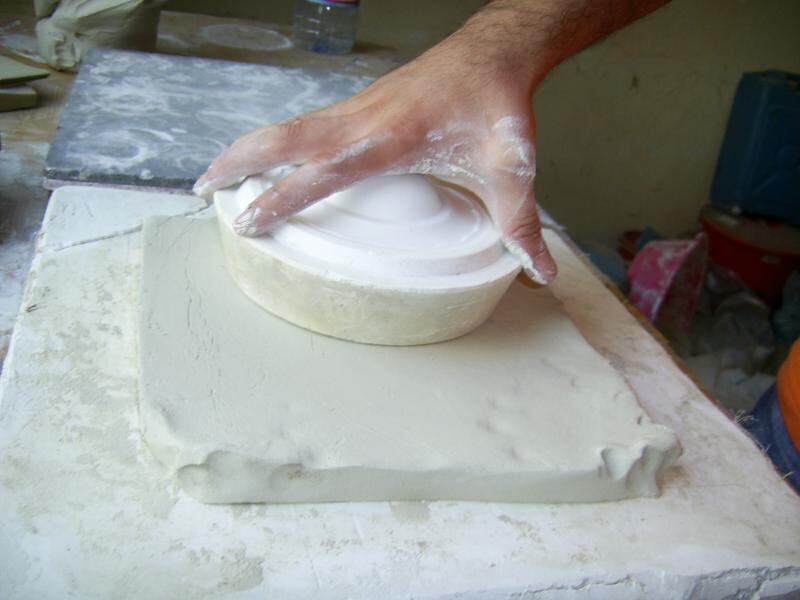
| Forming | Jigger and plaster mould (plates, bowls), press (tiles), casting (vases, jars). | Casting (oval platters, bowls), jigger (round plates), press. The same mould and casting logic. |
| DryingSame in both | Slow and even from every surface until leather-hard. Fast drying causes edge cracks and warping; thick pieces dry late. | |
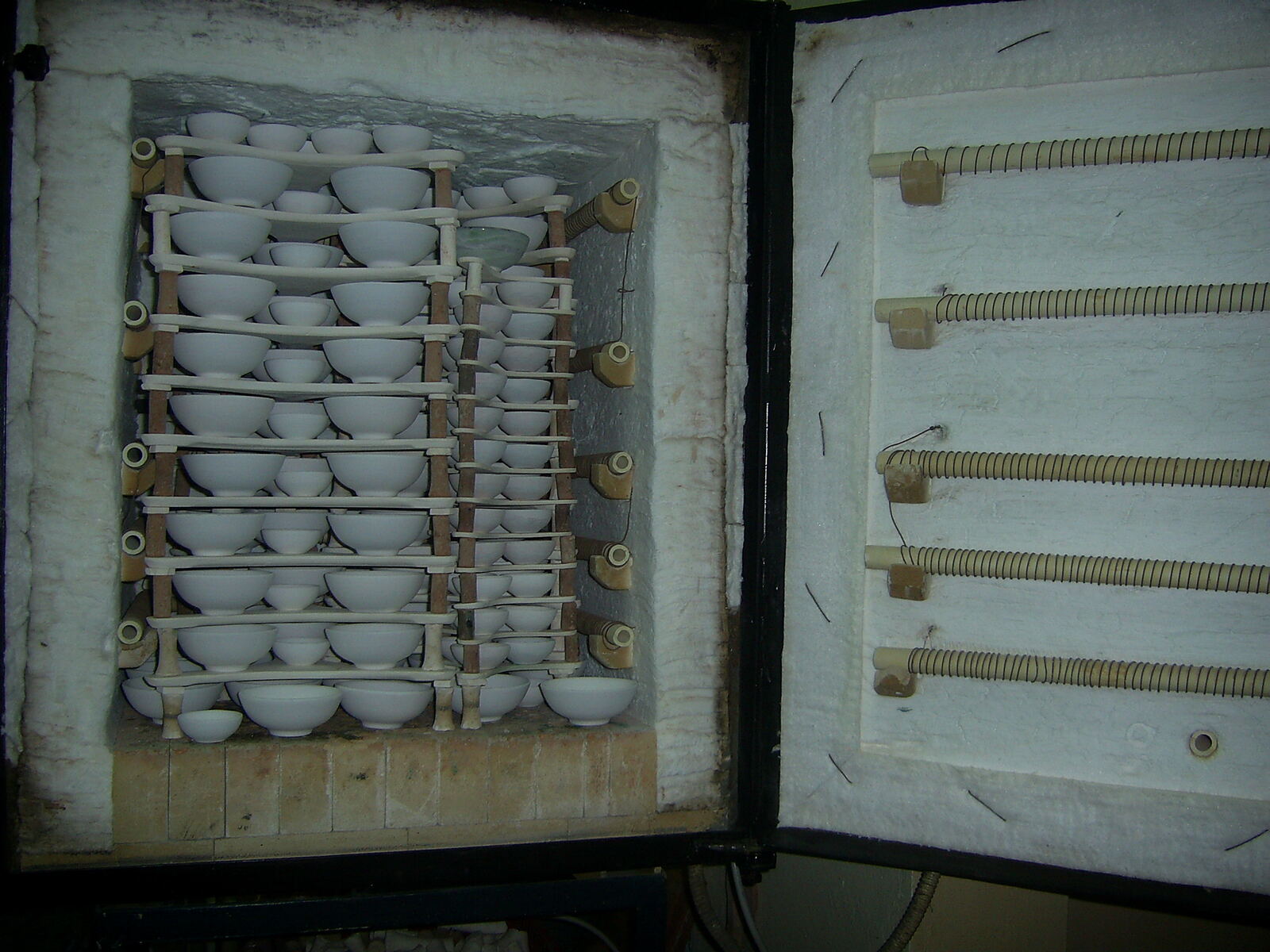
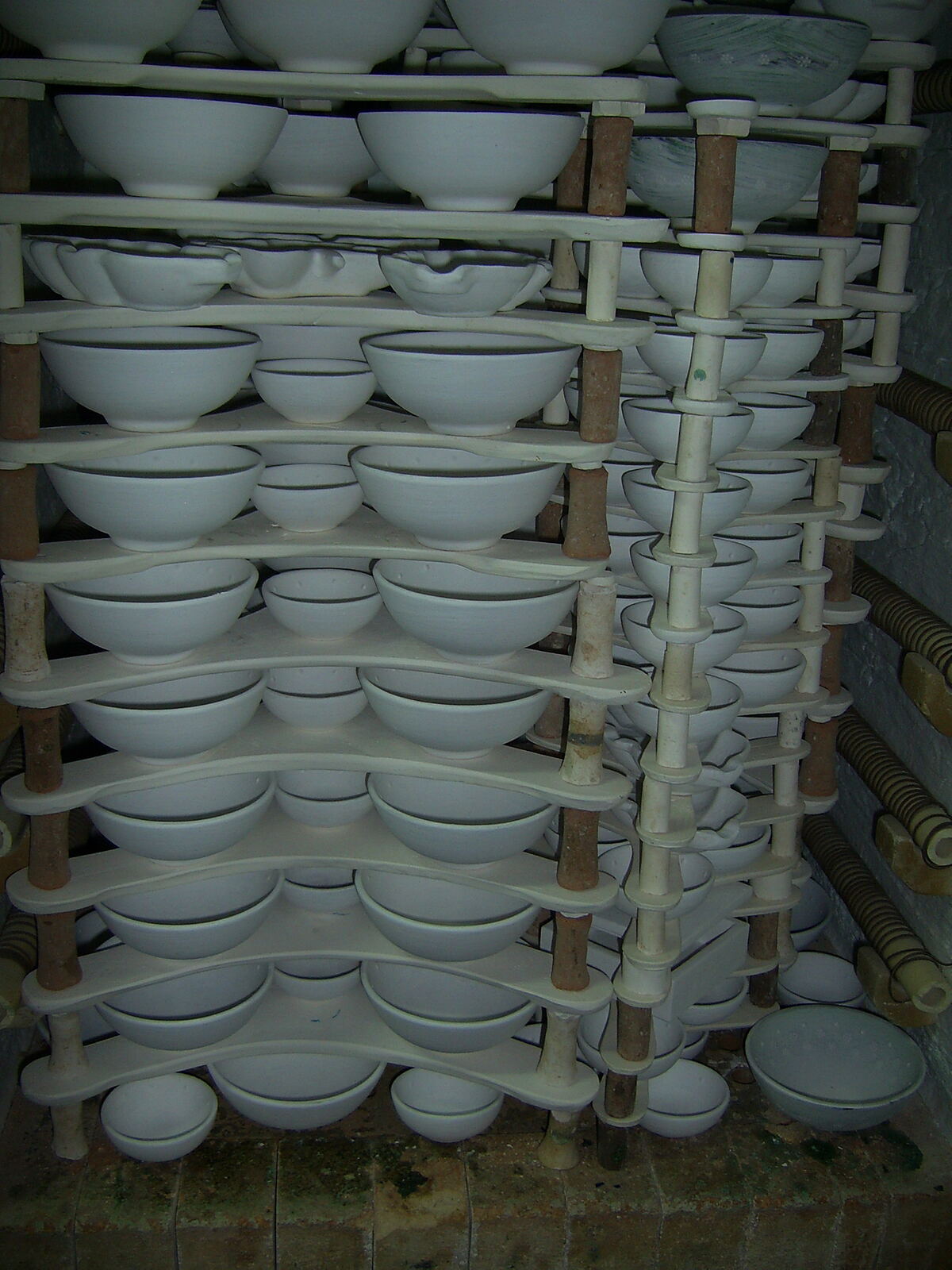
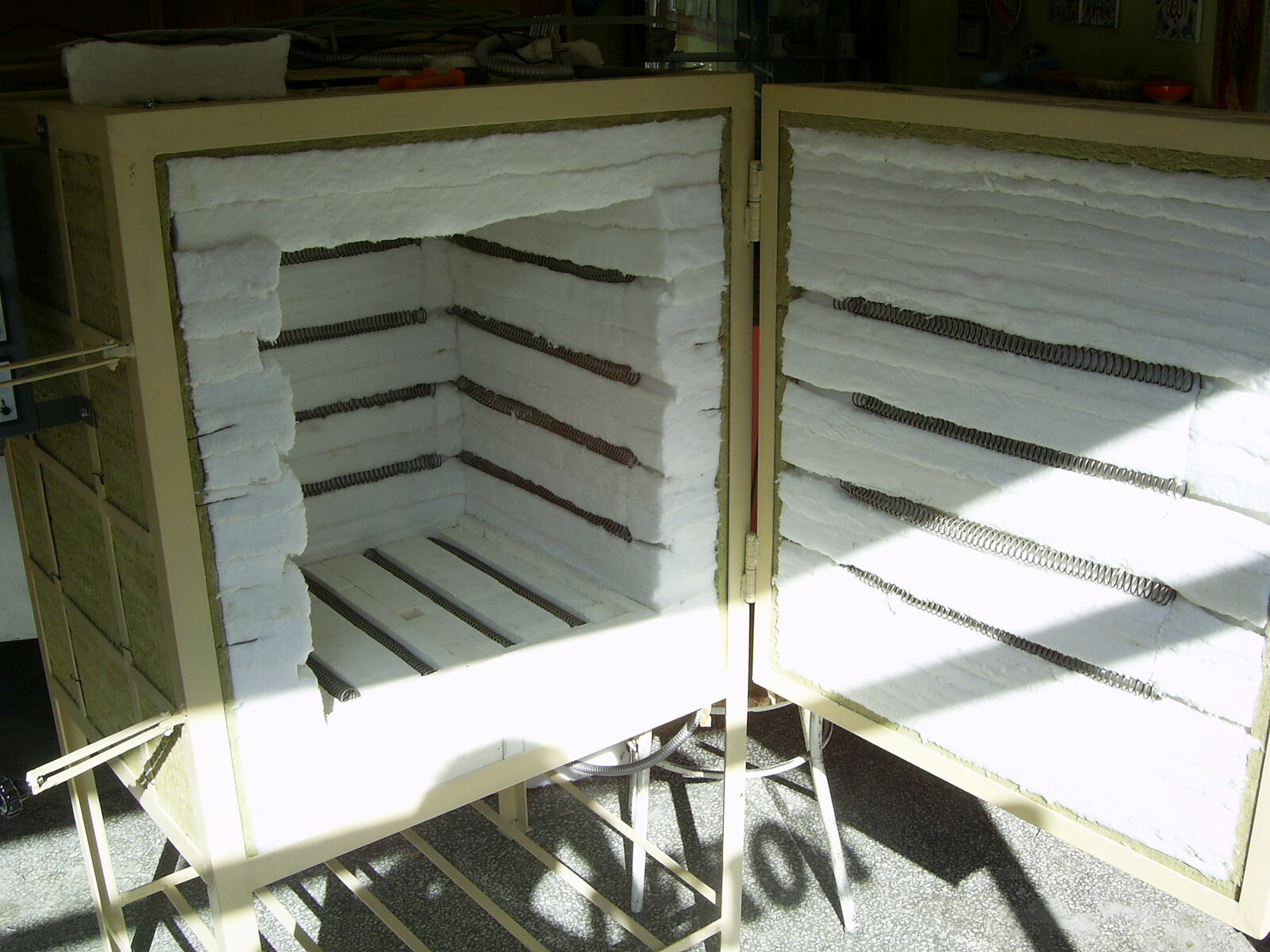
| Biscuit firing | 1040 °C. Higher than the glaze firing, so the form does not move in the second kiln; only glaze and paint melt. | Depends on the body. In stoneware and porcelain the order is often reversed: low biscuit, high glaze firing. |
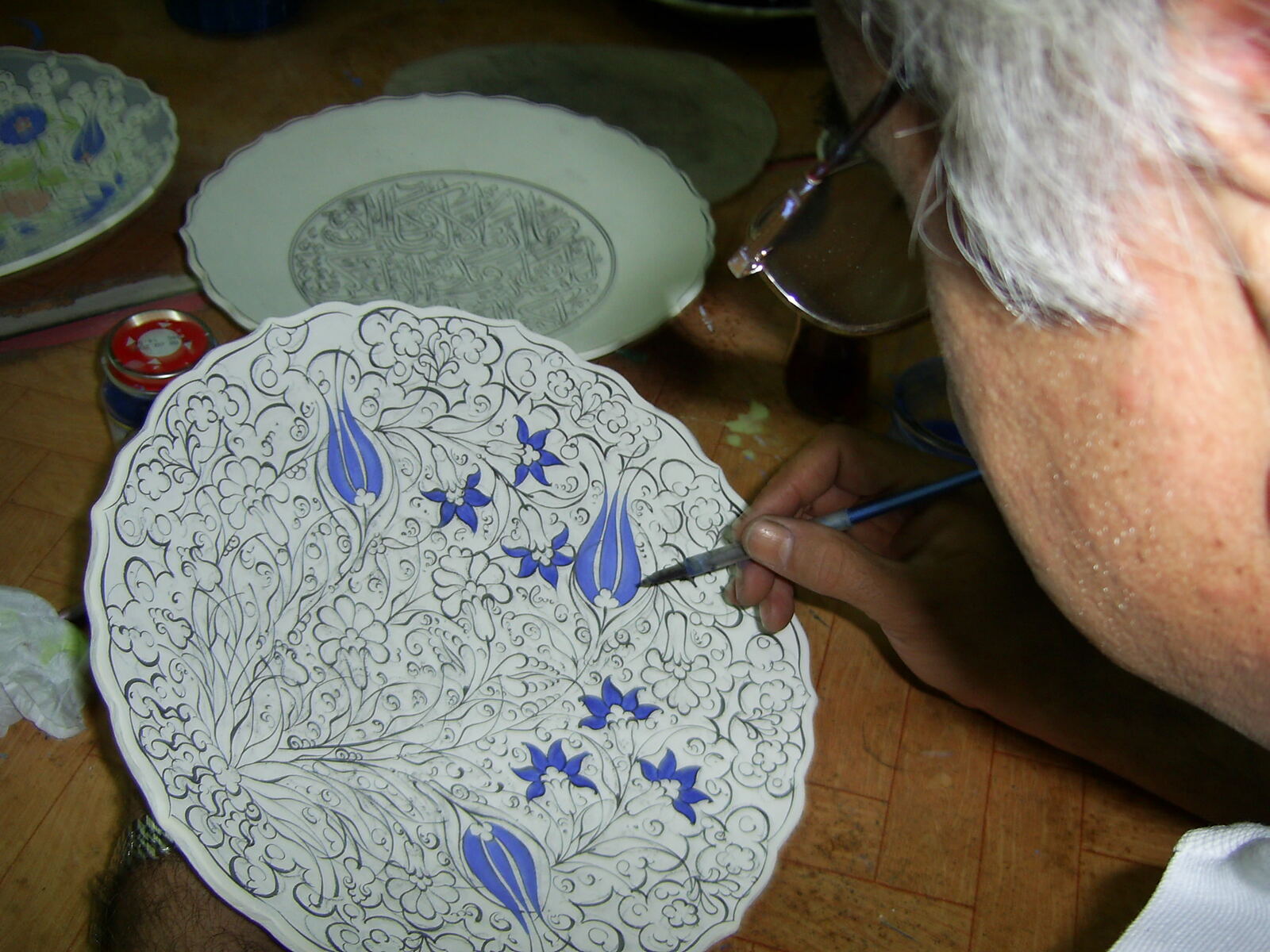
| Decoration | Underglaze: pounced design, brush outline and colouring. The paint lies under the glaze, so it does not fade. | No decoration on plain white. On decorated ware, underglaze, in-glaze or on-glaze; brush, print or decal. |
| GlazingSame in both | Dipping or spraying. Clear glaze on çini; clear or opaque white glaze on tableware. | |
| Glaze firing | 910 °C. The glaze melts and locks the colour beneath it; slow cooling. | 1000–1200 °C depending on the body; 1200 °C and above for soft porcelain, where the body vitrifies. |
| InspectionSame in both | Crazing, pinholes, crawling, colour runs, warping. A piece that fails is not sold. | |
We produce by measuring
Laser particle-size analysis (2014) of the workshop's casting slip. Litre weight and deflocculant range are kept by daily checks.
- Casting slip D50
- 7.3 µm
- Litre weight
- 1700–1800 g/L
- Deflocculant
- 0.2–0.5 %
- Organic burnout
- 600–1000 °C, slow
Water absorption and strength
As temperature and flux increase, the body vitrifies: water absorption falls and strength rises. The order is:
- Çini
- Ceramic, wall tile
- Stoneware, floor tile, sanitaryware
- Soft porcelain, porcelain tile
- Hard porcelain
Çini stands at the head of this order: porous, fired low, allowing a wide underglaze palette. Tableware sits in the middle; porcelain at the end.
Same workshop, same hands
The decoration table, the kiln and the showcase. Photographed in the workshop.
Reach the workshop
Phone, WhatsApp or e-mail. We reply within one working day.
- Phone+90 555 714 34 45
- WhatsApp+90 555 714 34 45
- E-mailfatihinag@gmail.com
- AddressLala Hüseyin Paşa Mah., Ertuğrul Gazi Cad. No:9843040 Merkez / Kütahya · Open in maps
- HoursWeekdays 09:00–18:00Write first for Saturdays.