Production
How çini is made
A quartz-rich body, a white slip, underglaze decoration, a clear glaze and two firings. That is the recipe of Kütahya çini; this is how it is made in our workshop.
The body
The body of Kütahya çini is mostly quartz, with kaolin, clay and a little frit. The raw materials are ground, sieved and left to rest.
A fluid slip is prepared for casting; a filter-pressed paste for pressing and jiggering. The whiteness and quartz content of the body are the first condition for colours that stay vivid after firing.
- Composition
- Quartz, kaolin, clay, feldspar
- Source
- Kütahya Çinisi geographical indication file, Turkish Patent Office (2005)
Forming
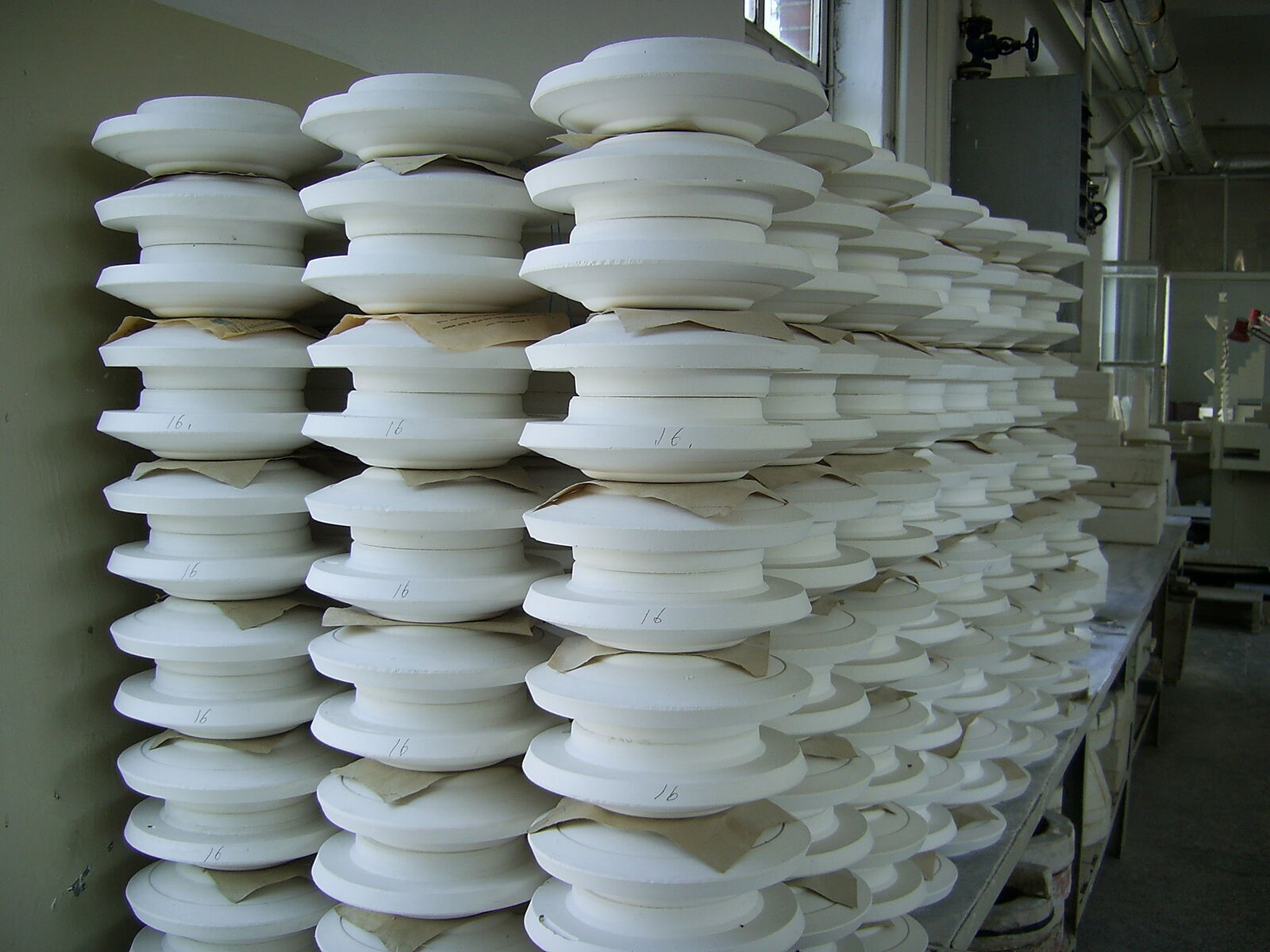
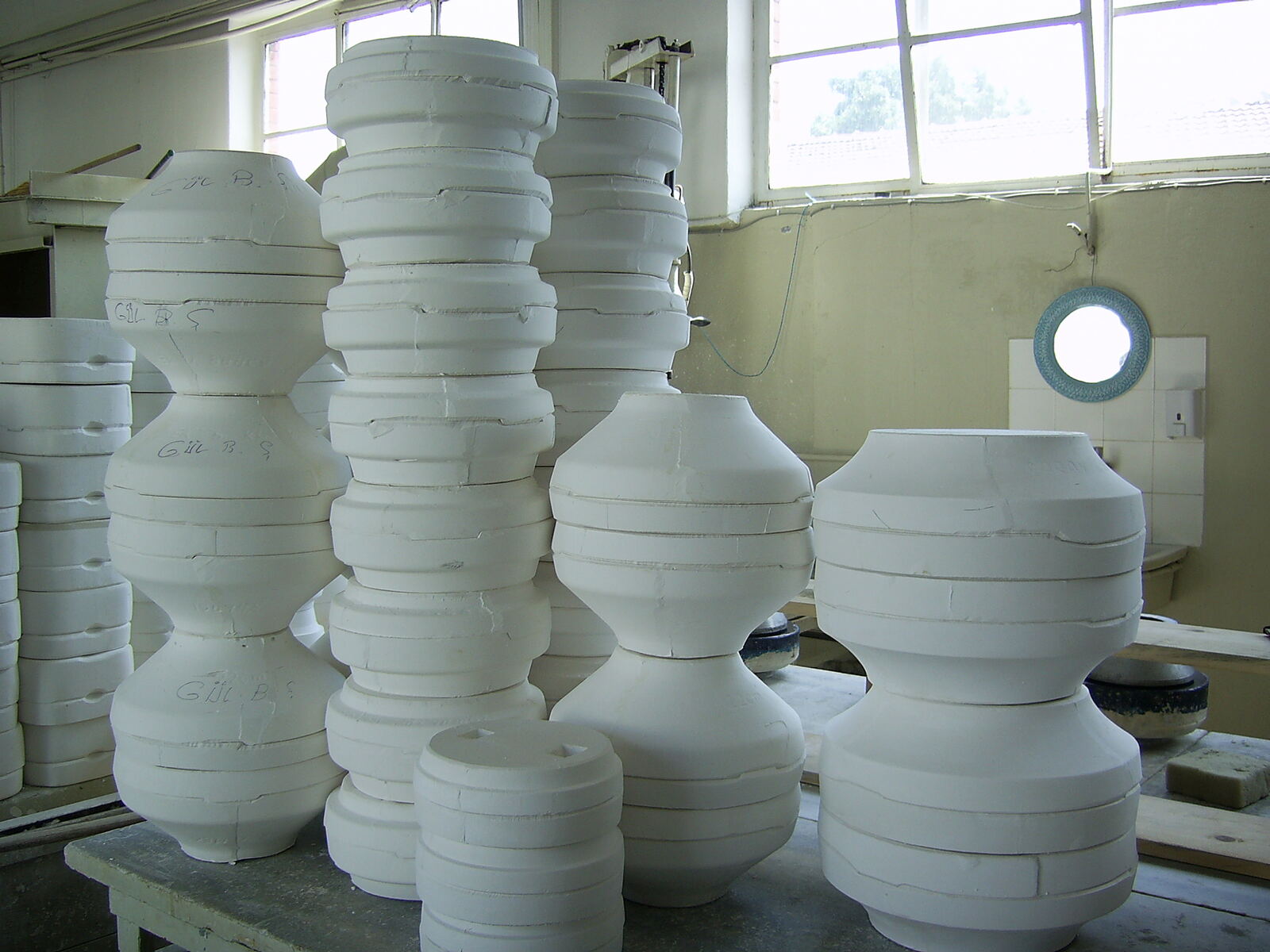
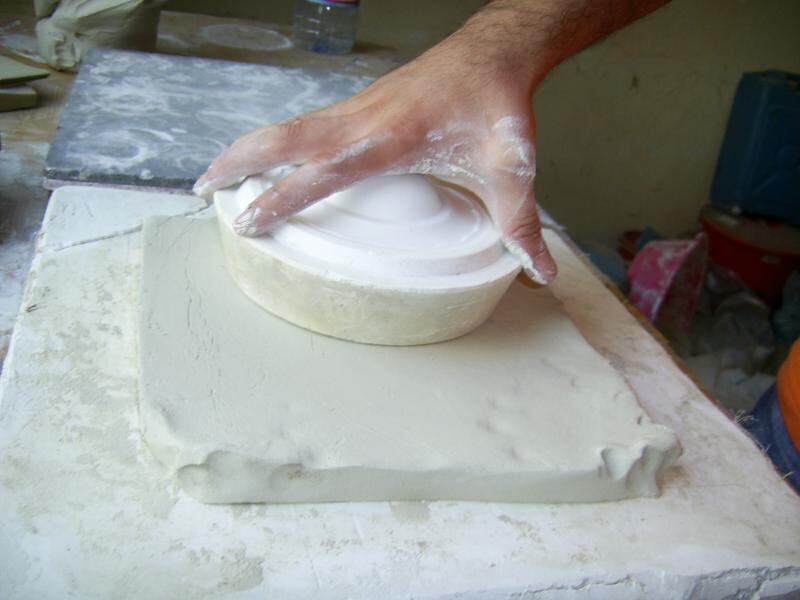
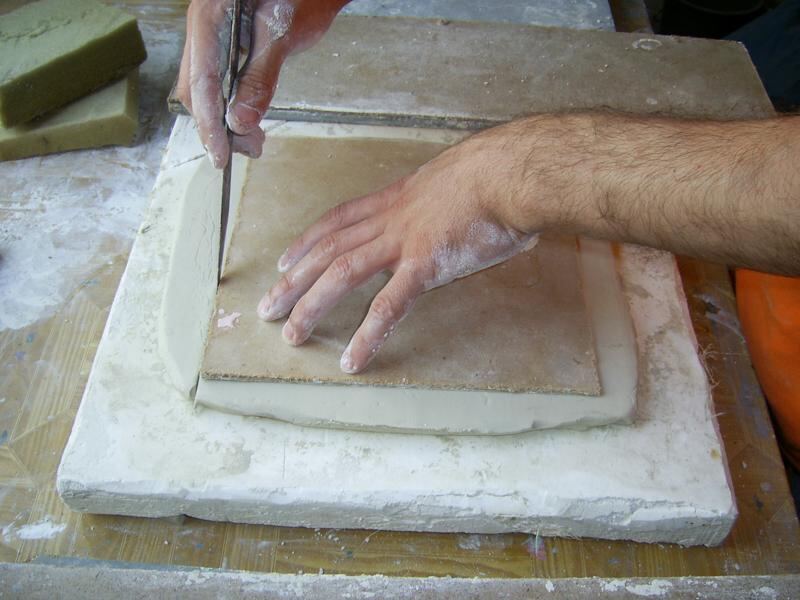
Plates and bowls are formed on the jigger or in plaster moulds, tiles in a press, vases and jars by casting. The form dries for a few days; it is fettled and the edges are smoothed with a sponge.
- Methods
- Plaster mould, casting, press, jigger
Slip and biscuit firing
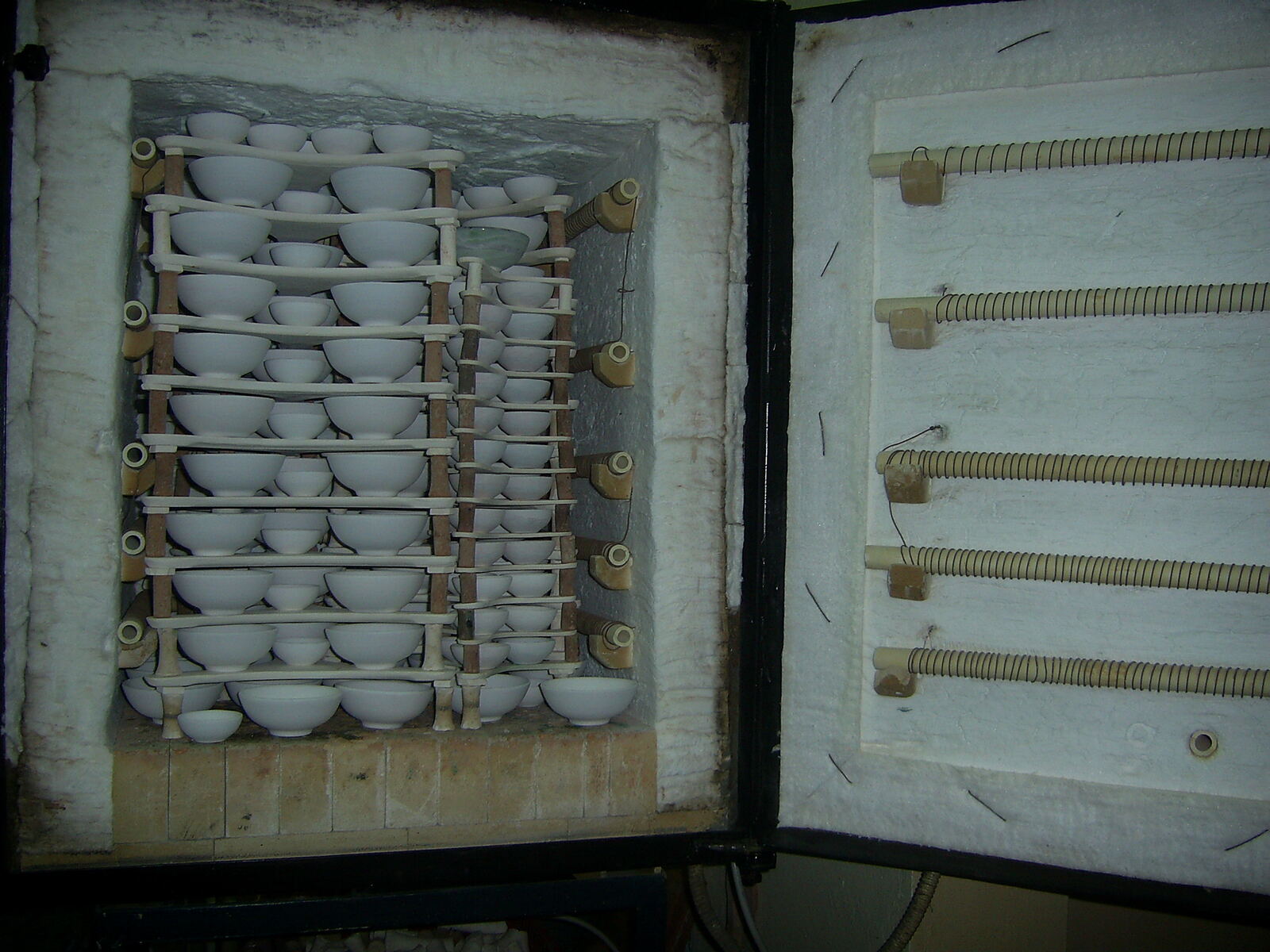
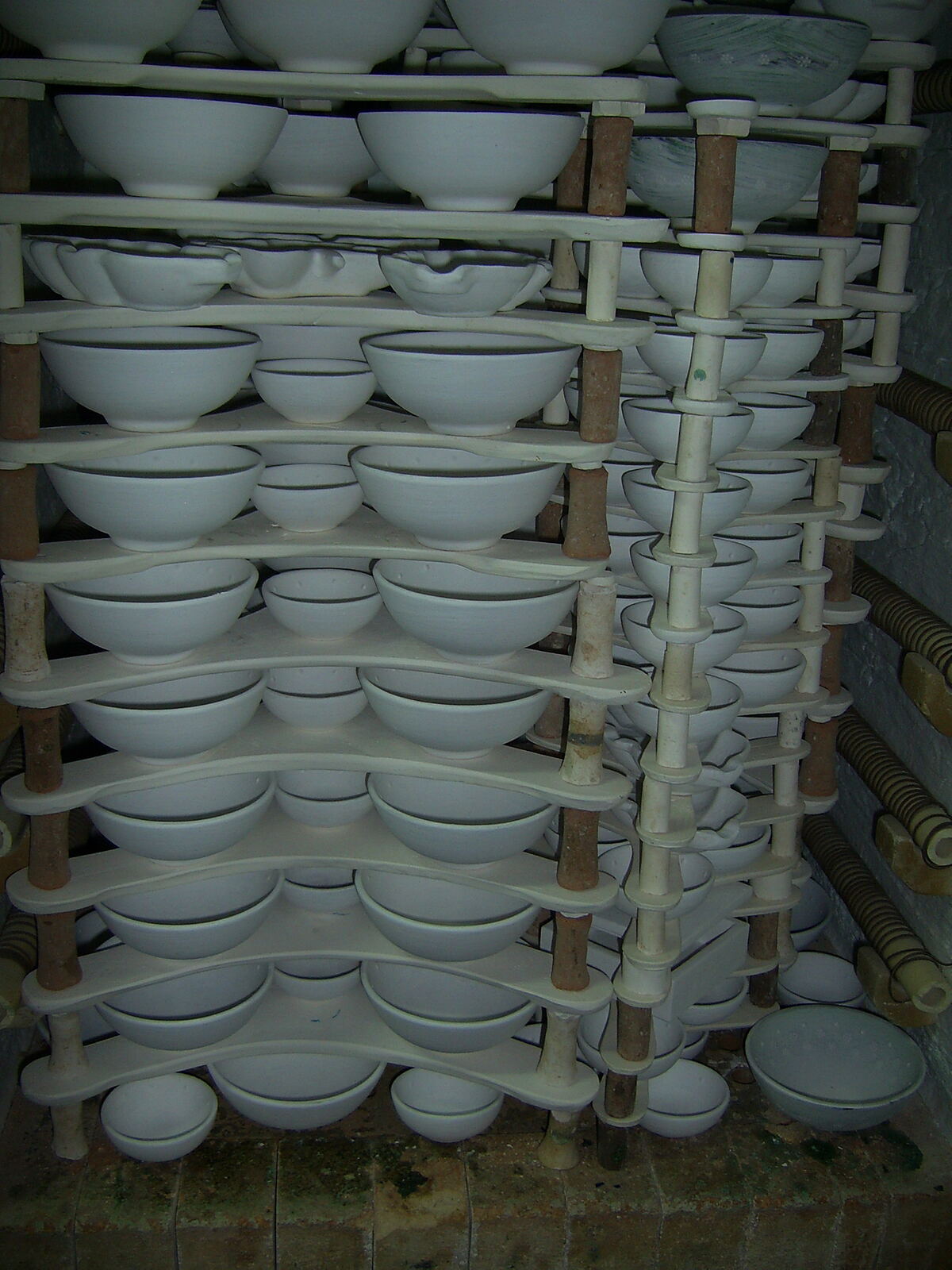
The dried form is coated with a white slip and goes into the kiln for the first time. Biscuit is the porous, absorbent surface the decoration is painted on; it holds the paint and absorbs the glaze.
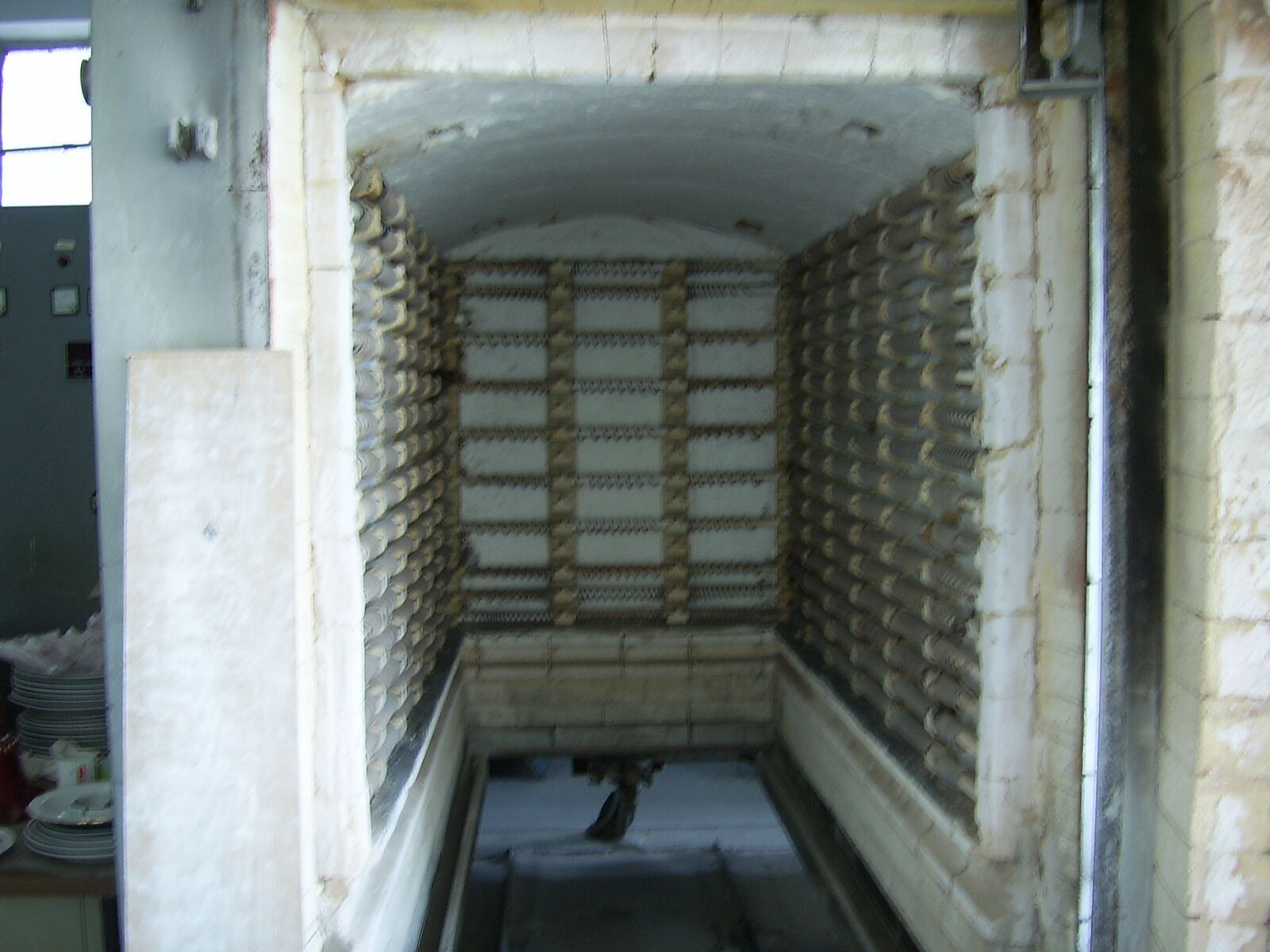
The biscuit temperature is higher than the glaze firing, so the form does not move in the second kiln; only the glaze and the paint melt.
- In our workshop
- 1040 °C
- In the literature
- 1050–1100 °C (geographical indication file)
Design and outlining
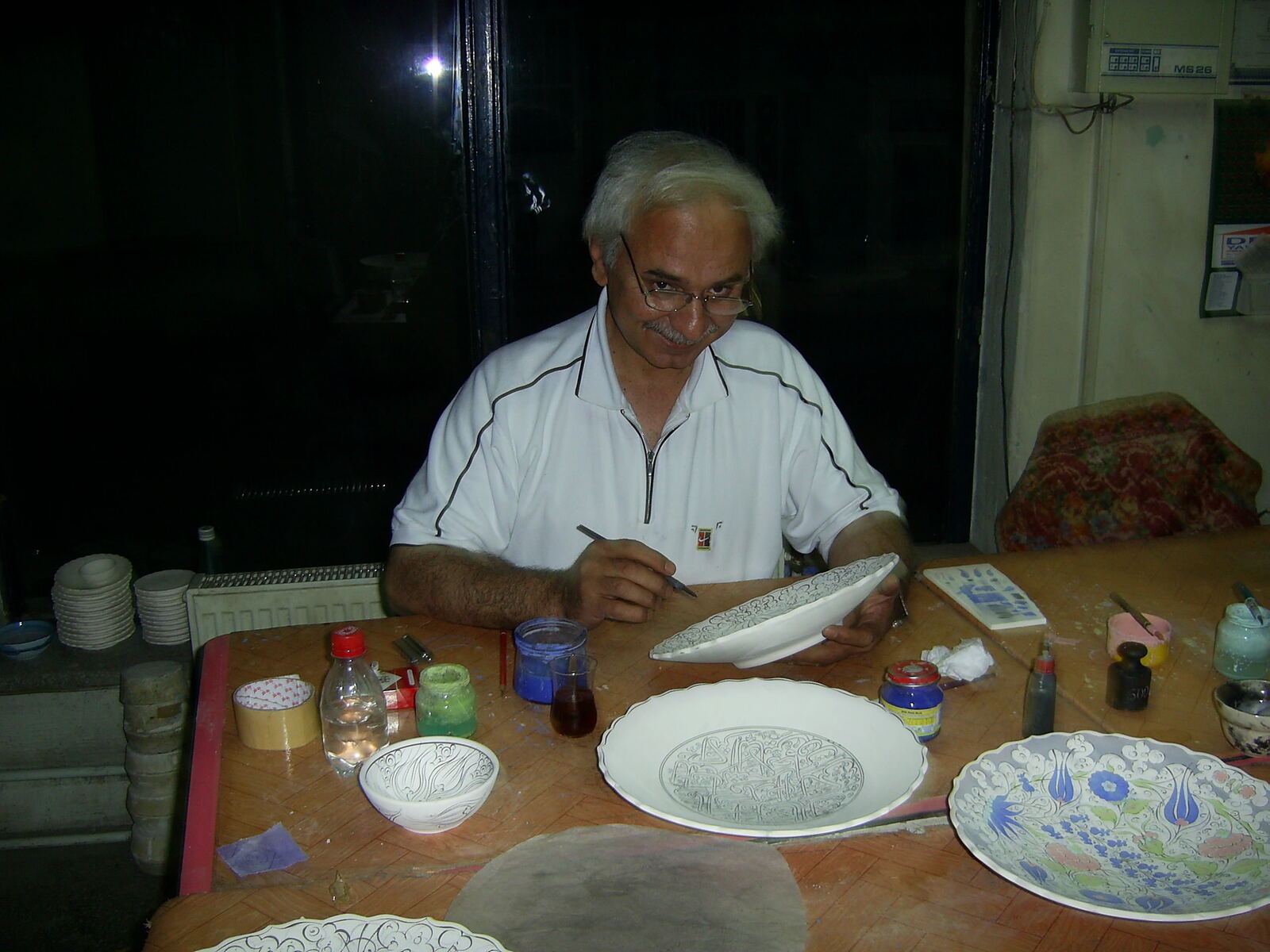
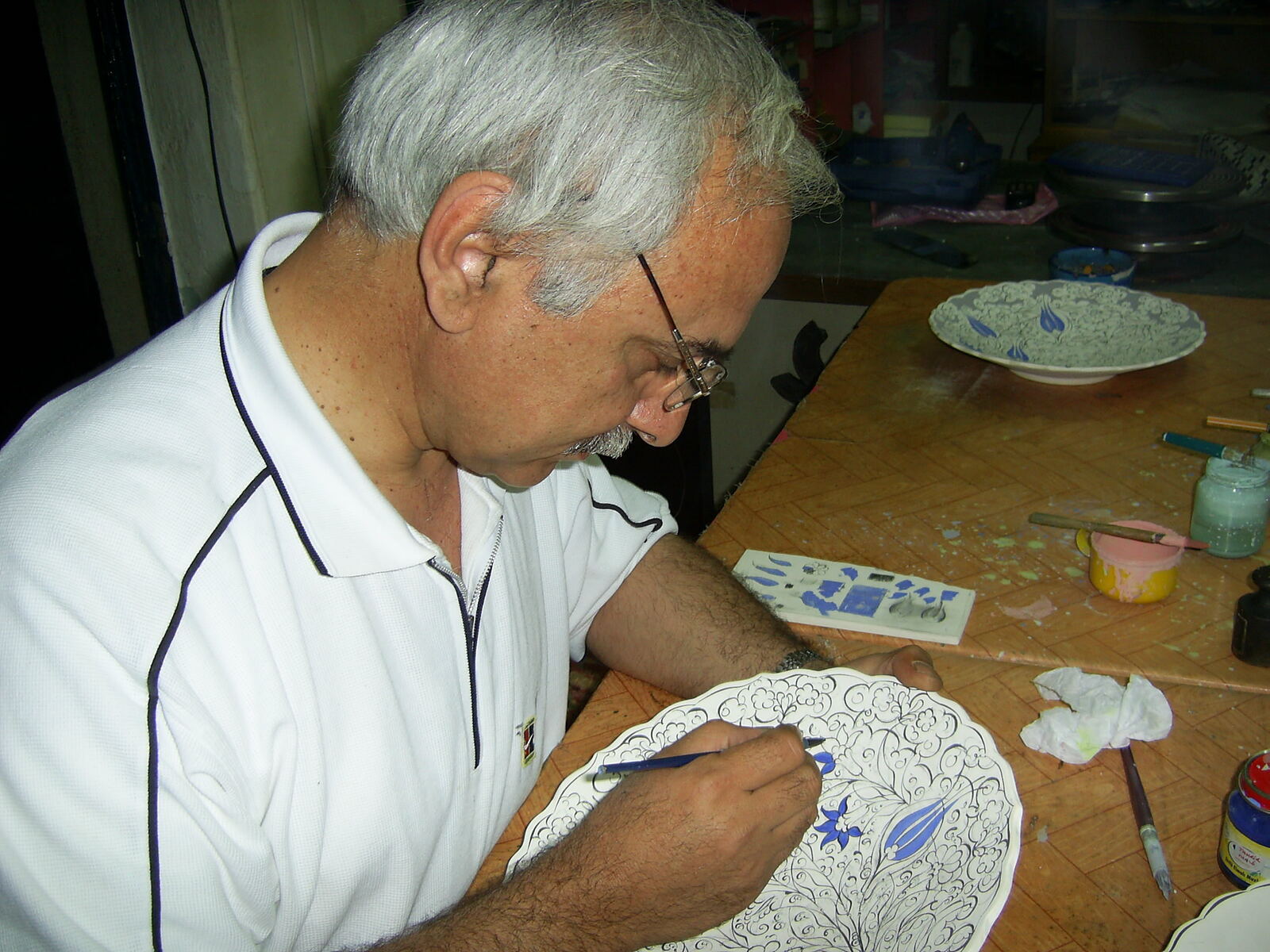
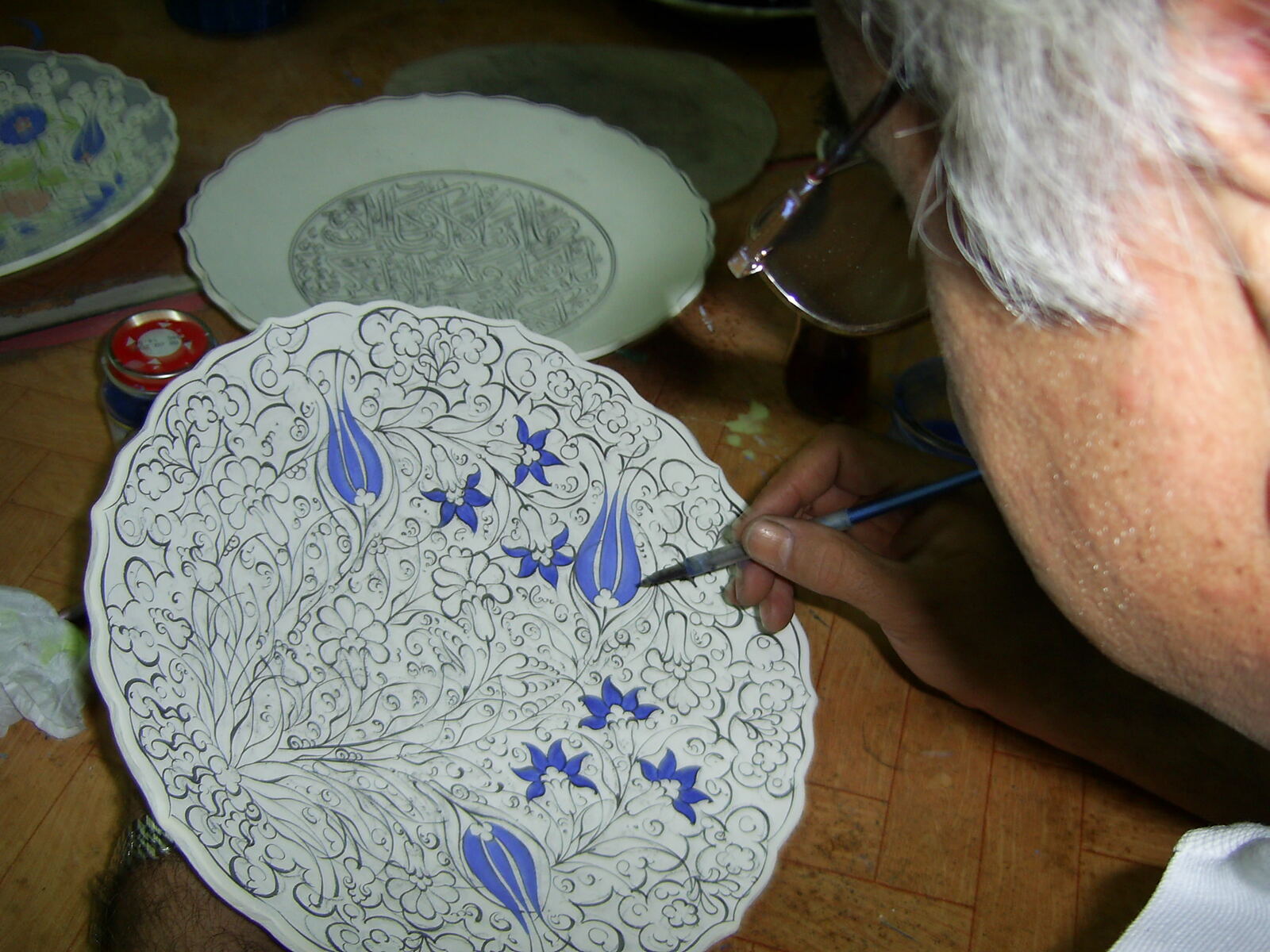
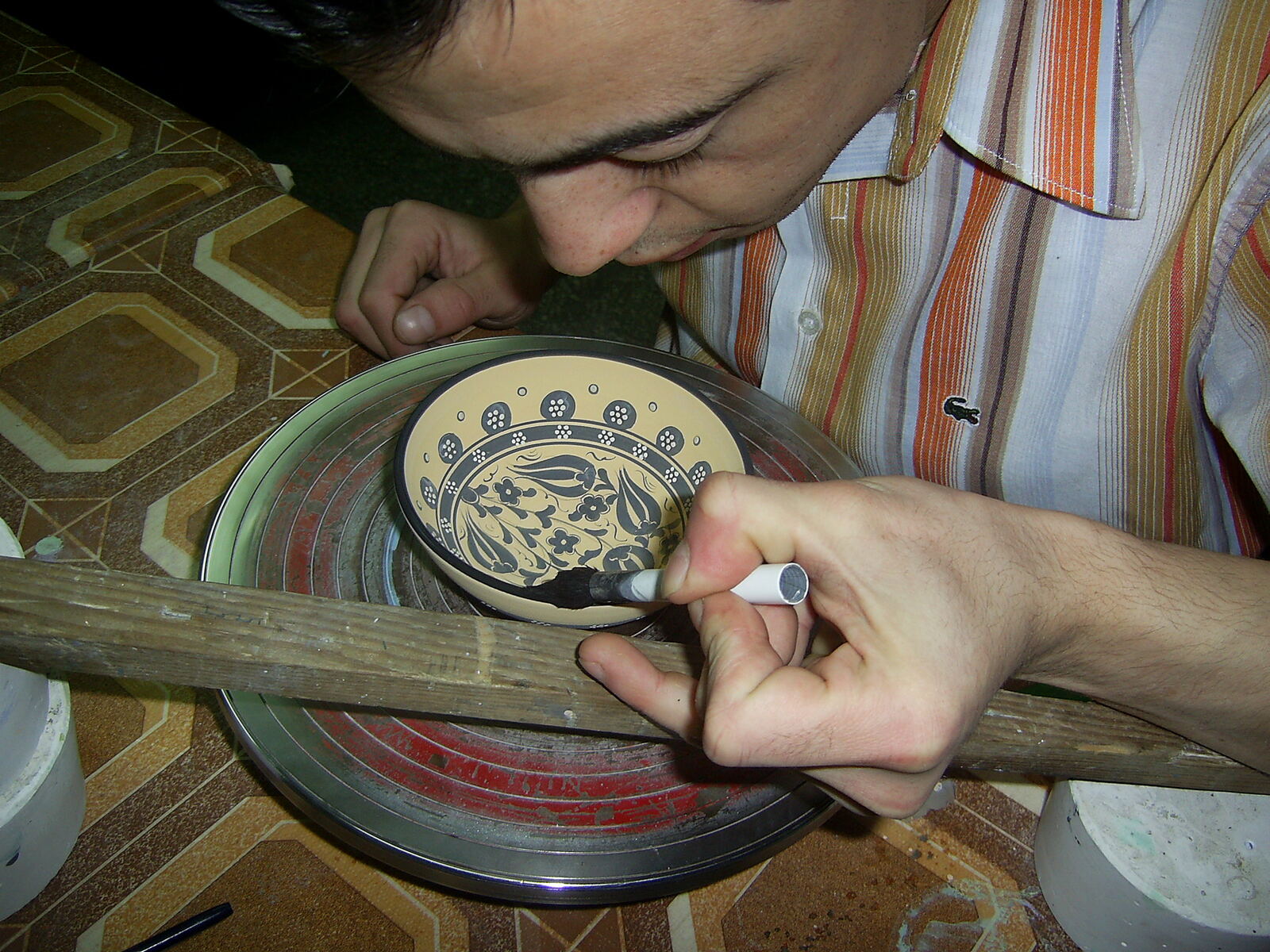
The design is transferred to the biscuit with a pin-pricked paper stencil and charcoal dust; this is called pouncing. Then the outline, tahrir: the contour of the design is drawn with a fine brush in black or cobalt.
The outline is the skeleton of the decoration. The weight of the line, the flow of the curves and the symmetry show the master's hand; it is the most time-consuming stage in the workshop.
- Line
- Chromite-based black or cobalt
- Tools
- Outlining brush, paper stencil, charcoal dust
Colouring
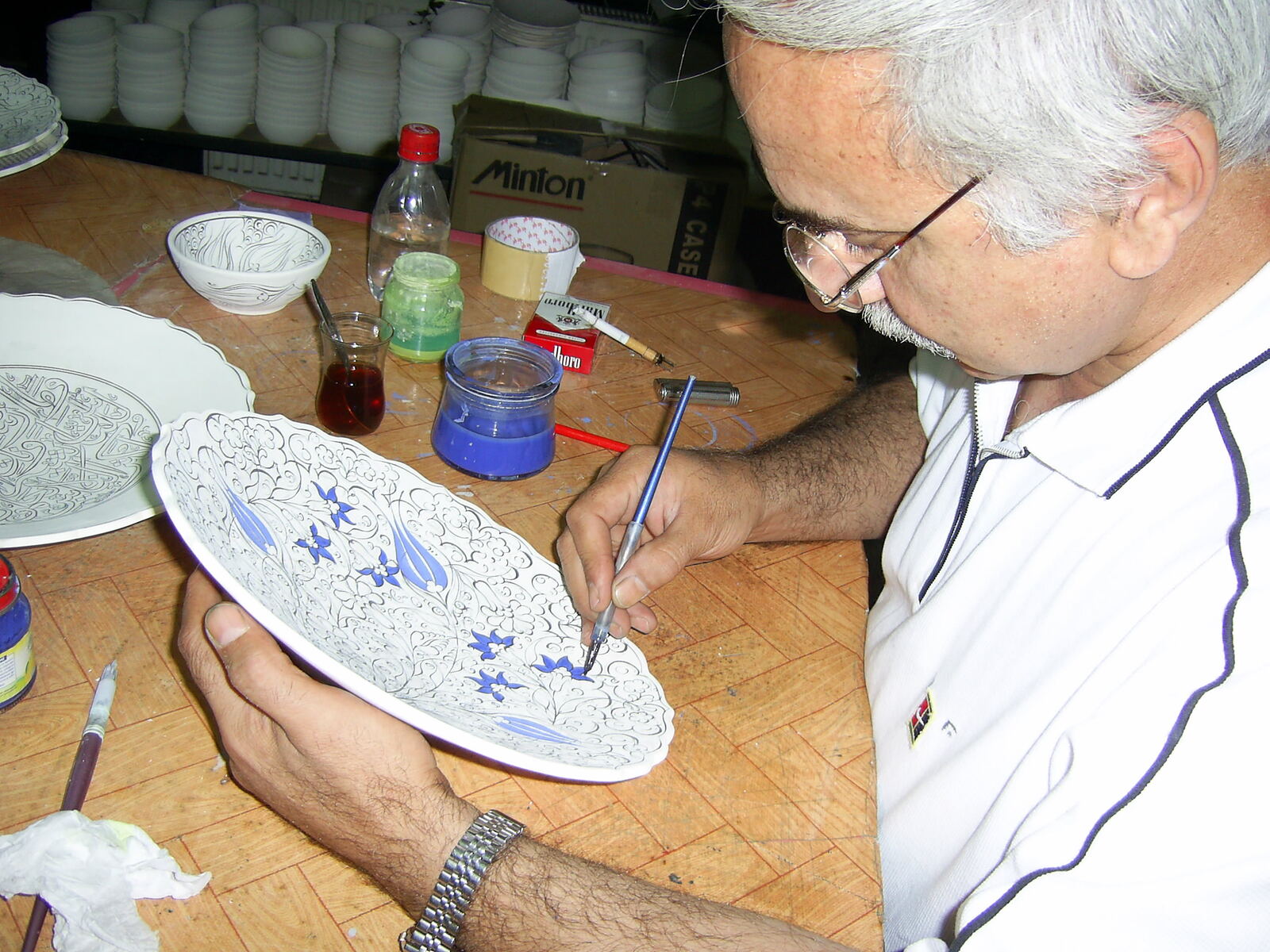
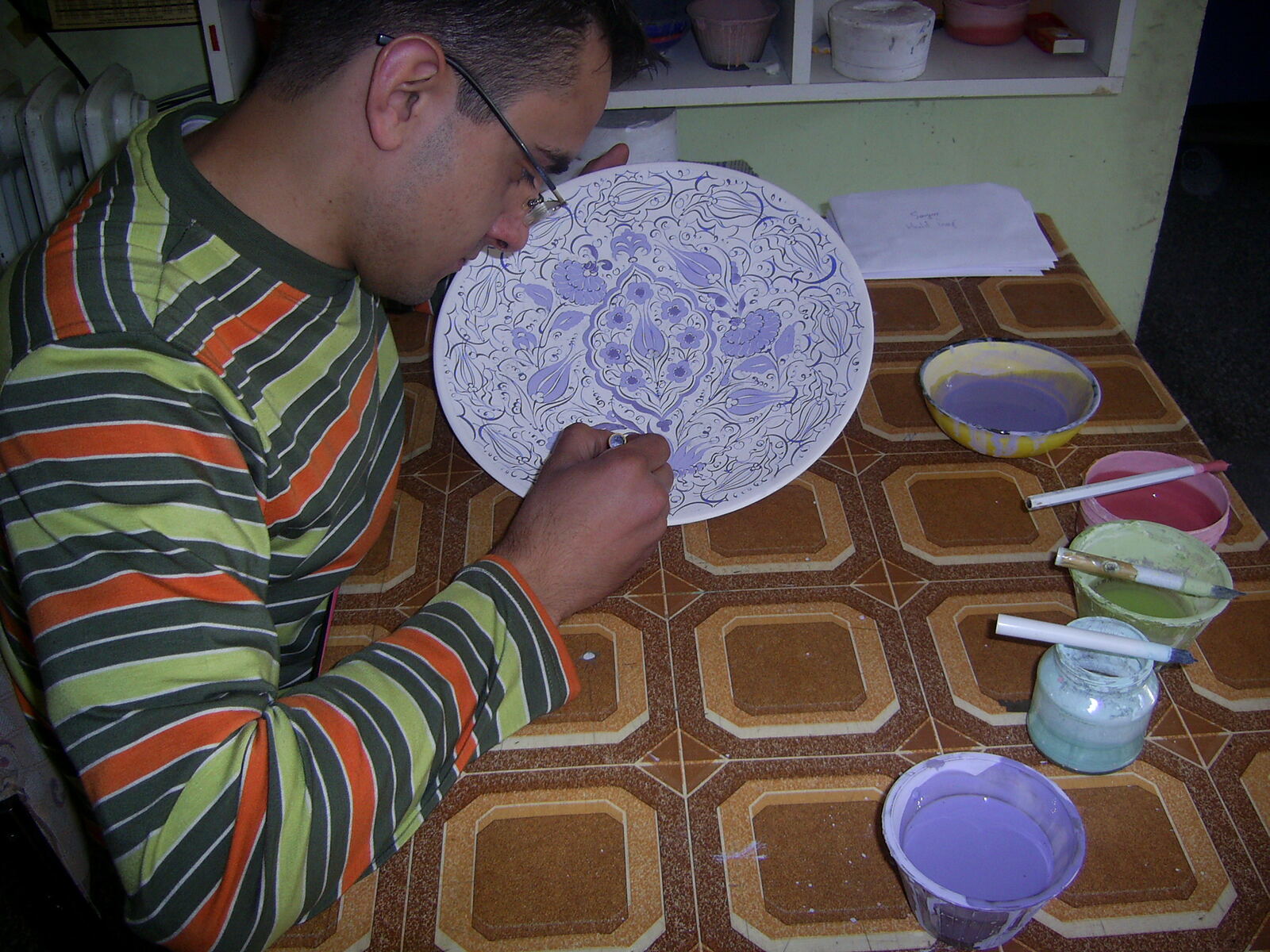
The colours are underglaze paints: cobalt blue, copper turquoise, chrome green, manganese purple and an iron-based red. They are filled in by brush, one by one, inside the outlined areas.
Because the paint lies under the glaze it does not fade or rub off. The tone depends on the thickness of the paint and on the kiln, which is why every plate is slightly different.
- Palette
- Cobalt, turquoise, green, purple, red, black
Glazing
The decorated piece is coated with a clear glaze, sprayed or dipped. In the kiln the glaze turns into a layer of glass; it deepens the colours and protects the surface.
- Method
- Spraying or dipping
Glaze firing
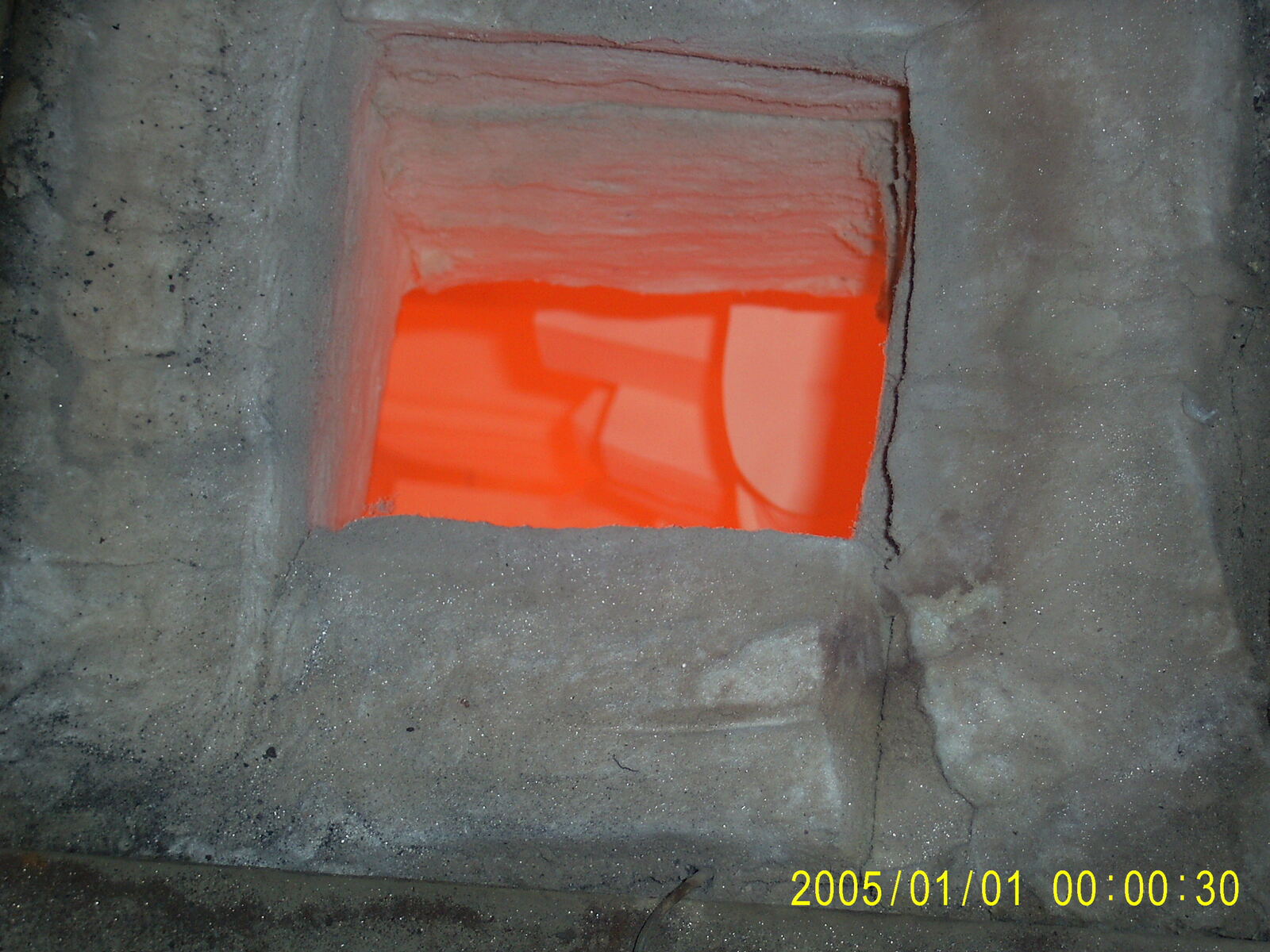
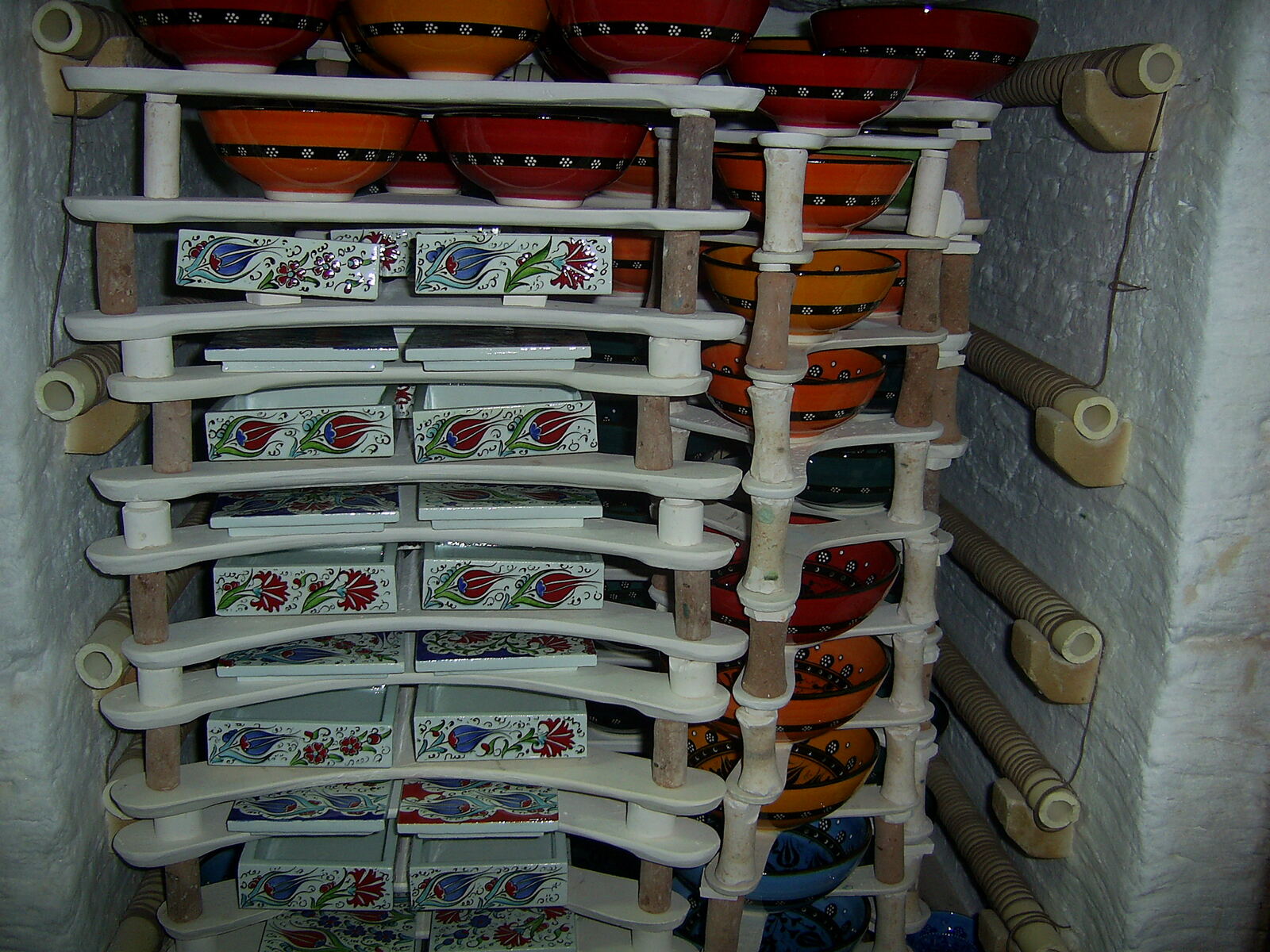
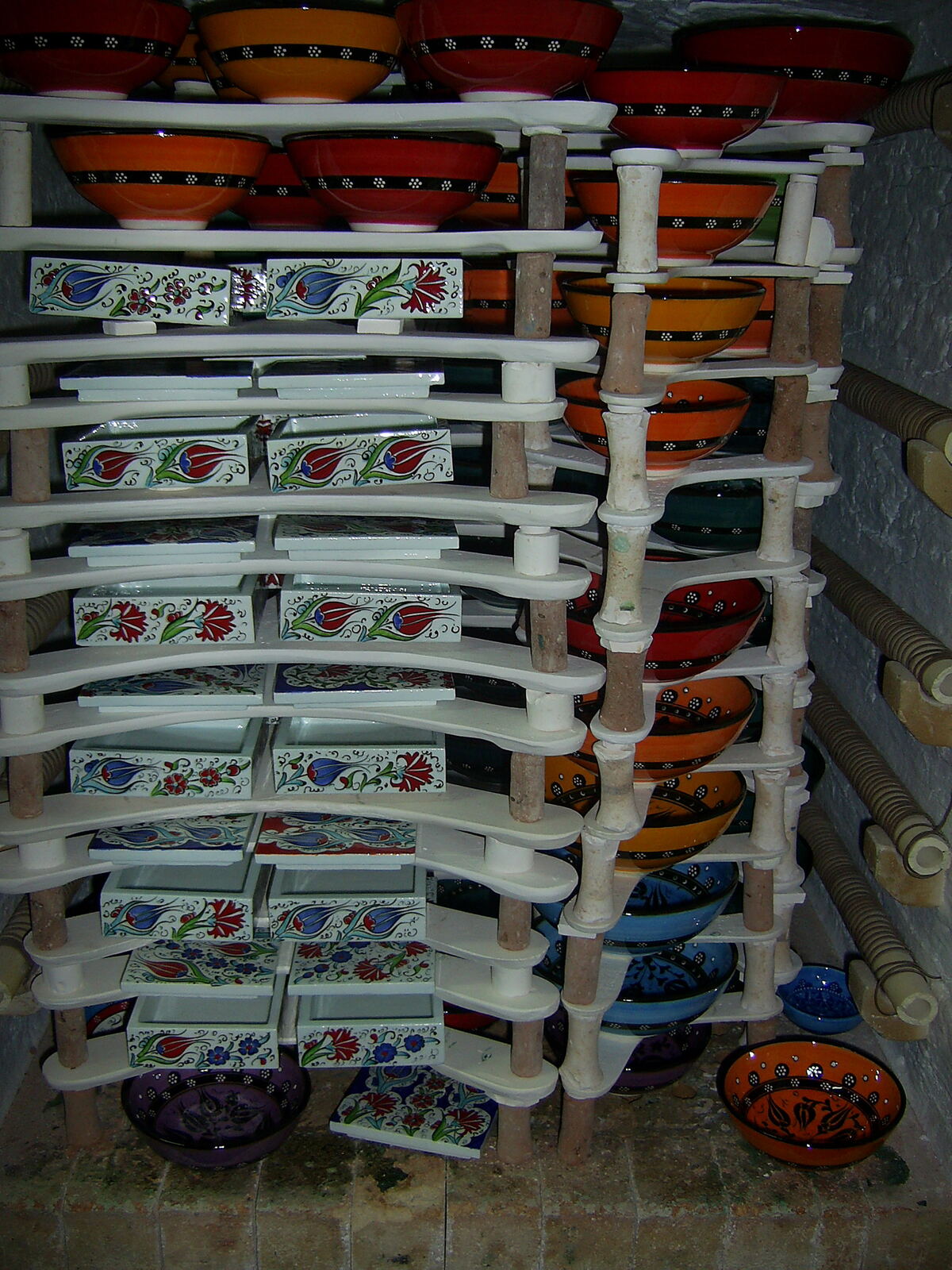
The second firing. The glaze melts and the colours are locked beneath it. The kiln is cooled slowly; fast cooling cracks the glaze.
- In our workshop
- 910 °C
- In the literature
- 900–1000 °C (geographical indication file)
Inspection
Every piece out of the kiln is checked one by one: crazing, crawling, colour runs, warping. A piece that fails is not sold.
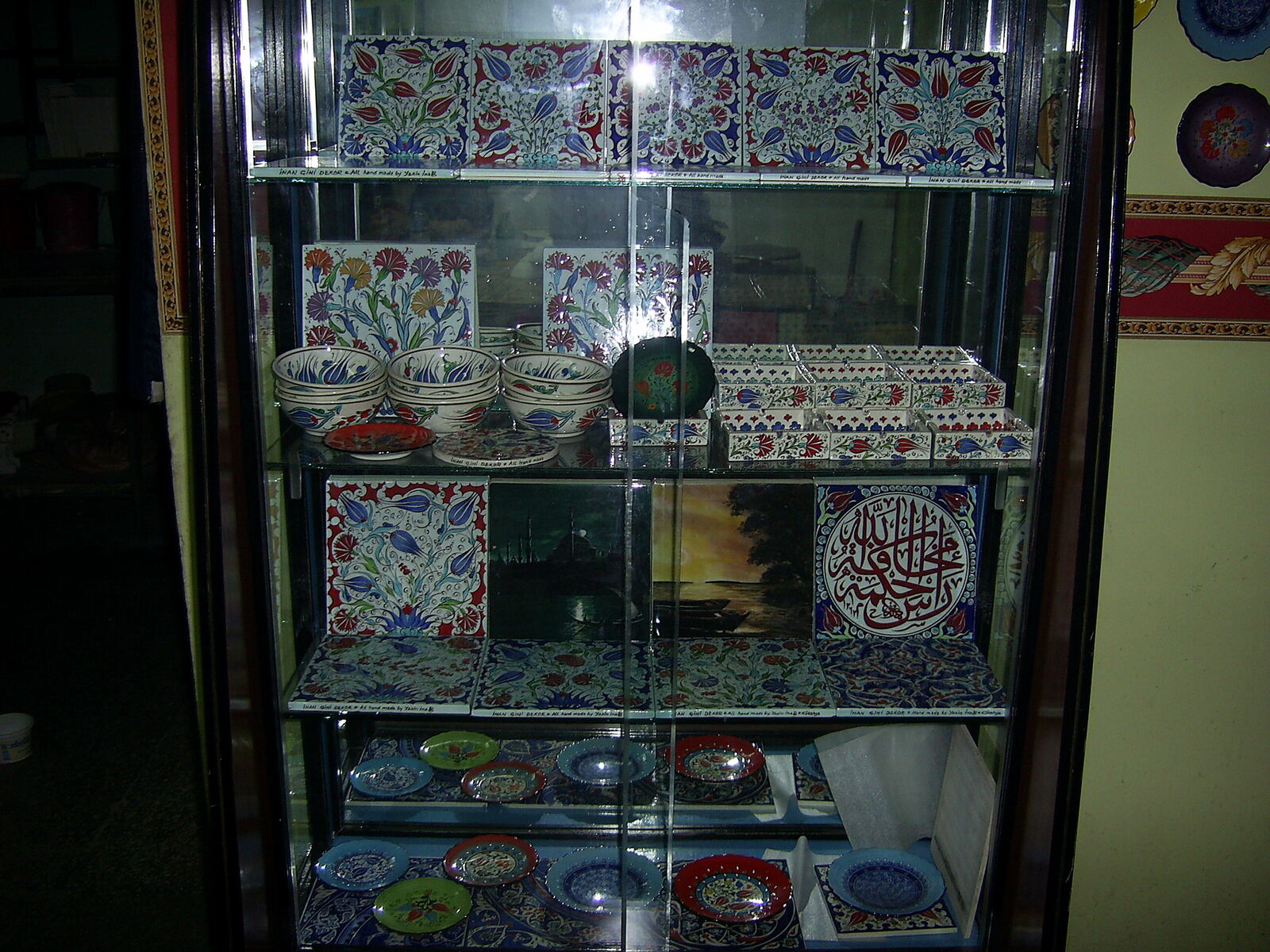
Motifs
The motifs we use most, and their names.
The chief motif of Ottoman çini; slender, with curling tips.
Petals opening like a fan.
A ground filled with fine spiral tendrils and tiny leaves.
Curling, animal-derived abstract stems and leaves.
A fully stylised group of flowers and leaves.
A Chinese-derived winding cloud band; a ground filler.
Three dots and two wavy lines; a symbol of power.
A long, serrated, curving dagger leaf.
Çini or ceramic?
Porcelain fires above 1350 °C and vitrifies; in çini only the glaze and the paint melt, and the body stays porous. The low temperature allows a wide underglaze palette, which is why çini colours are so vivid. Our çini is decorative; it is not made as tableware.